
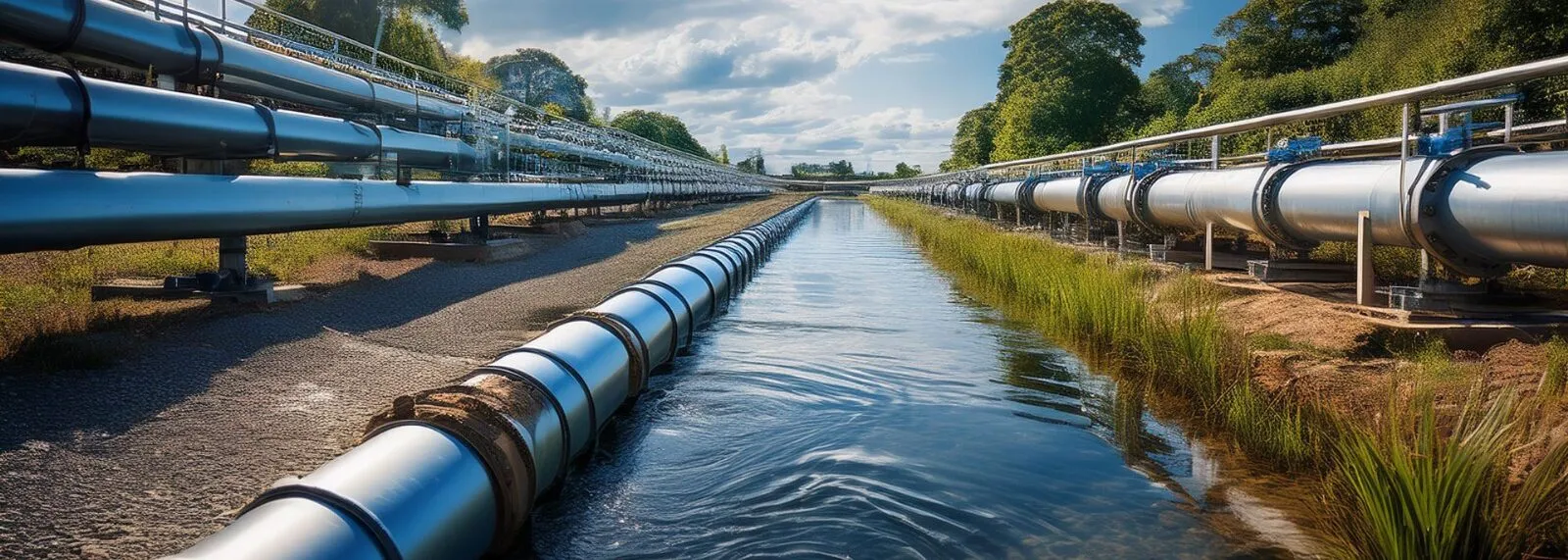
Can the West Build a More Energy Efficient Water Pipeline System similar to the interstate electrical grid? The Answer is Yes.
The American West is grappling with significant water scarcity issues, driven by climate change and growing demand from agriculture, industry, and burgeoning populations. While traditional water transport systems relied on static pipelines and natural drainage, the concept of a flexible, energy-efficient “interstate water system” is gaining traction as a potential solution. The answer to whether such a system can be built is yes, leveraging both existing and novel technologies to overcome the immense challenges.
The Challenge: Moving Water Uphill, Efficiently
Unlike an electrical grid that transmits power relatively easily, moving vast quantities of water across the continent faces a fundamental physical hurdle: elevation changes. Pumping water over the Rocky Mountains—a lift of thousands of feet—requires enormous amounts of energy. Existing large-scale projects like the Central Arizona Project (CAP) demonstrate feasibility but highlight the significant energy requirements of traditional pumping. Traditional pipelines also present challenges with maintenance, wear, corrosion, and an inability to adapt to changing source and demand locations.
Innovative Technologies for Efficiency
The solution lies in adopting advanced technologies that drastically reduce the energy needed for transport. Water for the west is developing technologies that greatly reduce and virtually eliminate friction in a pipeline. Traditional pipeline technologies tend to be the backbone of our water transport system and certainly is needed to move water up in elevation. But these pipeline technologies are the same basic technologies that were used even during and before the Roman empire more than 2000 years ago. True we have made some minor improvements, over that time, but it is time to look at more game changing solutions.
Low Friction Hyper Aquifers (LFHA)
One proposed innovation from WFTW involves a new technology called LFHA. LFHA virtually removes all of the friction in a pipe making it possible to:
- Significantly reduce costs of water transport by greatly reducing the energy needed to only those needed for elevation changes.
- Gallon for Gallon, this approach promises a cost savings of over 50% compared to traditional methods.
- Additionally, with friction almost eliminated, it allows the pumping speed of the water to be much greater than what is currently possible in traditional pipelines.
- This allows for a pipe of a given diameter to transport 10 -100 times more water without wearing out the transporting pipe as it does in traditional pipelines. Clearly a game changer by allows for higher conveyance volumes (millions of acre-feet per year).
- Furthermore, as part of the LFHA technology, you also can generate more energy on down hill stretches when the water is not fighting friction.
- The big promise is that LFHA can provide a water backbone transporting millions of acre feet of water from where there is excess or even flooding to areas where the water is needed like Lake Powel or Lake Mead.
A Hybrid, Flexible Future
The future of water in the west requires a water transport grid that can provide water where it is needed when it is needed at costs that are affordable. Any water grid system would likely be a hybrid infrastructure, combining the flexibility of LFHA as the high volume backbone water transport combined with traditional pipelines and aqueducts to connect the irrigation systems and municipal systems to the backbone and the grid.
The development of a national water grid, much like the interstate highway system or electrical grid, would require decades of construction and substantial political will to navigate multi-state agreements and right-of-way issues. However, the engineering is possible, and the potential benefits—drought security, job creation, and sustainable growth for the American West—are significant.
